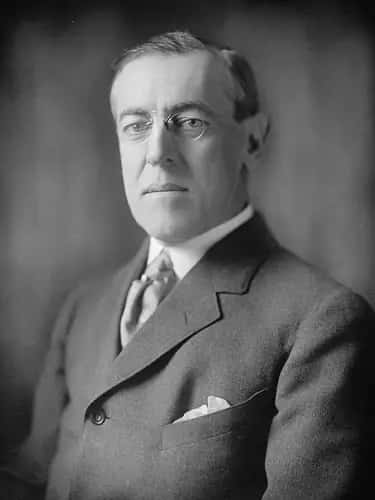
Born Archibald Alexander Leach in England, Cary Grant's early life was marked by hardship, including his mother's commitment to a mental institution and his father's subsequent remarriage. At 13, he ran away to join a troupe of traveling acrobats, eventually making his way to America at 17, where he worked various jobs before making his Hollywood debut in 1932 with "This is the Night." His early roles in films like "Blonde Venus" and "She Done Him Wrong" capitalized on his good looks, leading him to cultivate an aristocratic screen persona characterized by a smooth "mid-Atlantic" accent and sophisticated charm. Grant's career breakthrough came with "Sylvia Scarlett" (1936) alongside Katharine Hepburn, and he subsequently defined American style and sophistication in classics such as "Topper" (1937), "Gunga Din" (1939), "His Girl Friday" (1940), and "The Philadelphia Story" (1940). He also demonstrated emotional depth, earning two Academy Award nominations for "Penny Serenade" (1941) and "None But the Lonely Heart" (1944), and collaborated with director Alfred Hitchcock in the 1950s and 1960s before retiring from films in 1966 with "Walk, Don't Run."
Grant's personal life included five marriages: to Virginia Cherrill, Barbara Hutton, Betsy Drake, Dyan Cannon (with whom he had his only child, Jennifer Diane, in 1966), and Barbara Harris. He became a U.S. citizen in 1942. Known for his astute business practices, Grant often acted as his own agent, negotiated for a percentage of film grosses, and had significant creative control over his projects, including script and cast approval. Despite his wealth, he maintained an economical lifestyle, driven by a fear of returning to poverty. In his later years, Grant toured the U.S. with his fifth wife, engaging college students in discussions about his film career. He died in Davenport, Iowa, on November 29, 1986, following a massive stroke. Following his death, discussions emerged regarding his sexuality, referencing his early shared residences with John Kelly and actor Randolph Scott.
The Scales of Libra grace the Ascendant, imbuing this individual with an innate desire for harmony, balance, and partnership. They navigate the world with a refined social grace, seeking fairness and beauty in all interactions, often acting as a diplomat or mediator. This outward presentation, however, masks a complex inner world. The Sun in Capricorn, nestled in the communicative third house, speaks of a core identity built on discipline, responsibility, and a drive for tangible achievement, particularly through intellect and communication. There's a serious, pragmatic approach to life, a desire to build something lasting and structured, often expressed through their thoughts, words, and immediate environment. This Capricornian drive for mastery is tempered by the Aquarian Moon, also in the third house, revealing an emotional nature that is both intellectual and humanitarian. They feel most secure when engaged in stimulating conversation, when exploring innovative ideas, and when contributing to a larger cause. Emotions are processed through a lens of logic and detachment, seeking understanding and progress rather than raw emotional expression. This creates a fascinating duality: the need for connection and balance versus the drive for structure and the desire for intellectual freedom.
The fusion of a Libran veneer with a Capricorn Sun and Aquarian Moon in the third house suggests an individual who communicates with a natural sense of fairness and consideration, yet whose underlying motivations are deeply rooted in a desire for competence and a forward-thinking vision. Their relationships, governed by Venus in Sagittarius in the second house, are characterized by a broad-mindedness and a philosophical approach to values and resources; they seek freedom and growth through their possessions and sense of self-worth, often finding joy in exploration and learning. The placement of Mars in Aquarius in the fourth house indicates that their assertive energy and drive are directed towards creating an unconventional, progressive, and perhaps even rebellious home environment or foundation. There's a powerful impulse to innovate within their personal life and family sphere, often leading to a strong sense of independence and a desire to break free from traditional structures. This combination paints a picture of a sophisticated communicator, a disciplined builder, and an emotionally detached yet deeply principled individual who seeks to bring order and progress to both their inner and outer worlds.
Click any specific placement or mathematical aspect below to magically discover an entire database of famous figures who share this exact geometric DNA.