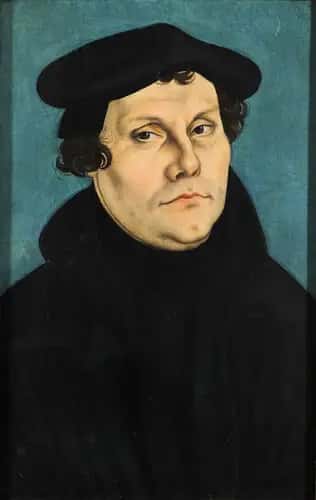
Born to Hans and Margarethe Luder, Martin Luther was one of several children and pursued an education at Erfurt University, earning a BA in 1502 and an MA in 1505. Despite his father's desire for him to study law, Luther was drawn to scriptural studies and, following a legend of surviving a storm, entered the Augustinian monastery in Erfurt in 1505, taking his vows in 1506. The rigorous monastic life, characterized by fasting, prayer, and work, deepened his connection to the Bible. He was ordained a priest in 1507 and began lecturing on philosophy and scriptures at the University of Wittenberg, becoming an influential preacher and professor. A mission to Rome in 1510-11 exposed him to what he perceived as corruption within the church, particularly the sale of indulgences by figures like Johann Tetzel, which Luther viewed as a distortion of church authority and a hypocrisy.
As a professor of biblical exegesis at Wittenberg from 1512, Luther began to advocate for salvation by faith rather than works. On October 31, 1517, he posted his 95 Theses on indulgences on the church door at Wittenberg, challenging the pope's right to forgive sins; these theses rapidly spread across Europe. This act led to an inquisition and his excommunication by Pope Leo X on January 3, 1521, after he publicly burned the papal bull and refused to recant his teachings unless proven wrong by scripture or clear reason. He was then placed under the ban of the Empire and spent a year in protective custody at Wartburg, where he translated the Scriptures into German. In 1525, Luther further defied church dogma by marrying Katharina von Bora, a former nun, establishing a large household. He continued to spread his beliefs through writings and sermons, culminating in the Augsburg Confession in 1530, which many German princes and cities adopted. Despite battling physical ailments and experiencing personal loss, Luther continued to lead the Reformation until his death on February 18, 1546, in Eisleben. His voluminous works include "Of Good Works" (1520) and his complete German Bible translation (1534), contributing significantly to the sweep of the Reformation across Northern and Eastern Europe by 1555.
A magnificent inner fire burns within this individual, a Scorpio Sun cloistered in the foundational Fourth House, revealing a core identity deeply rooted in intense emotional exploration and the mastery of hidden realms. This placement suggests a profound need for privacy and a powerful drive to understand the psychological undercurrents of life, particularly within the domestic sphere and family lineage. The outward presentation, however, is one of regal Leo Ascendant, commanding attention with a dramatic flair and a generous, warm spirit. This persona is designed to inspire and lead, projecting confidence and a natural charisma that draws others in, masking the more private, probing nature of the Sun sign. The interplay between the intensely private Scorpio Sun and the flamboyant Leo Ascendant creates a fascinating dynamic, where a deep, often secretive, inner world is expressed through a bold and radiant exterior, seeking validation and admiration.
Click any specific placement or mathematical aspect below to magically discover an entire database of famous figures who share this exact geometric DNA.